QUARTERLY BUSINESS REVIEWS · B2B AGENCIES
What’s crucial for a great QBR?
A good review shows progress. A great one helps you and the client decide what happens next.
We’ve all sat through a terrible quarterly business review: a polished deck, a long list of completed tasks, and no useful decision at the end. Everyone says “great update” and goes back to work.
For a B2B agency, a QBR should answer a more useful question: is our work helping this client get where they want to go, and what should we do together next?
This structure comes from the anonymized agency QBR outline behind Armando. The owners-and-dates step is our recommendation for turning the conversation into follow-through. Adapt the meeting to the client; the agenda is a starting point, not a script.
The two things that matter most
1. Start with the client’s priorities
What changed in their business? What is their sponsor trying to achieve? Which goals still matter, and which no longer do? Agree this before reviewing your work. Otherwise you can give a very convincing presentation about the wrong thing.
2. Leave with a decision and a next step
The meeting should change something: a priority, a commitment, a risk response, or the plan for next quarter. Write down who owns each agreed action and when it is due. A good conversation without follow-through is still unfinished work.
A six-part QBR agenda you can use
Start with what matters to the client. End with a shared plan. This is the outline—not a request for six more complicated slides.
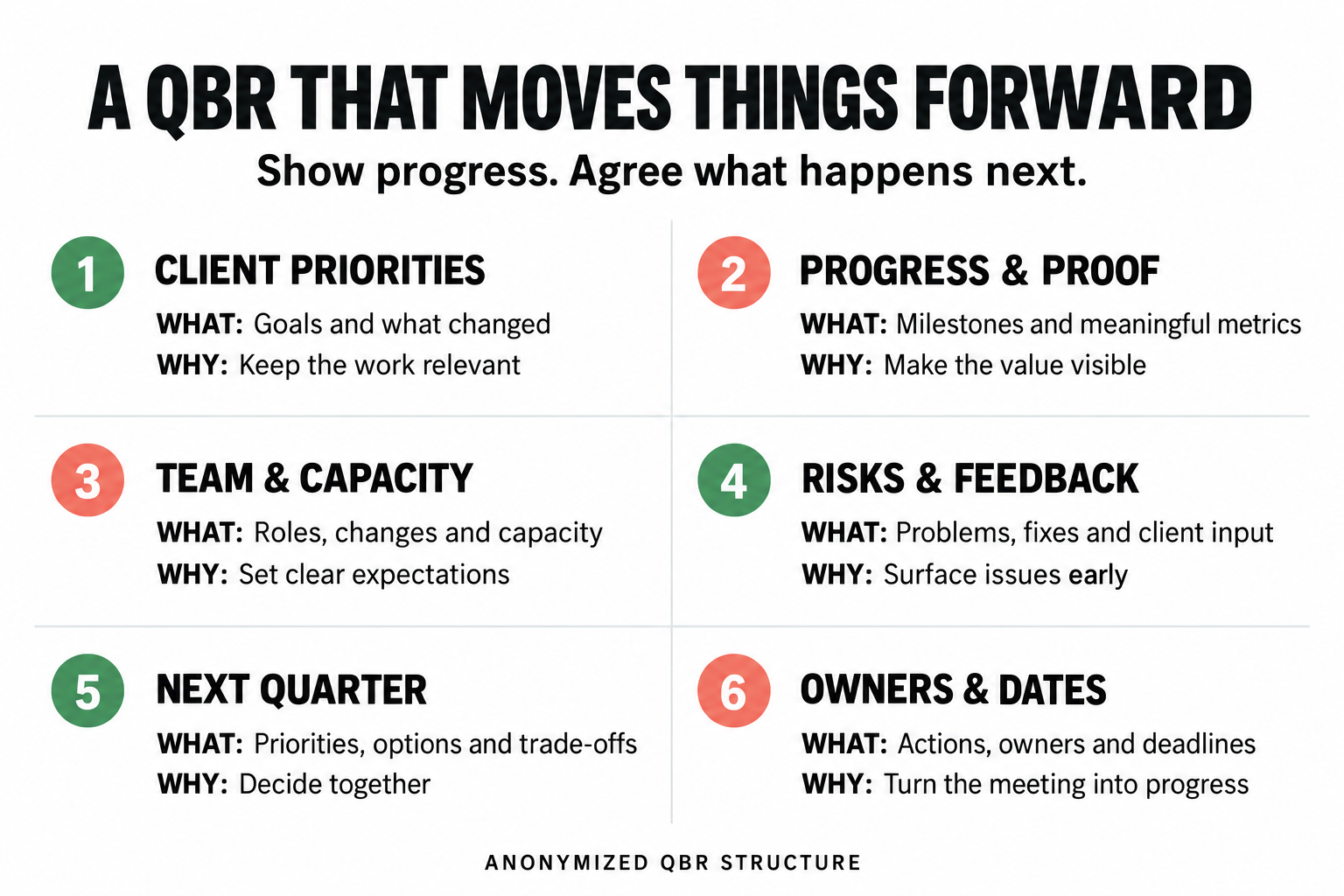
1. Client priorities
What: Reconfirm business goals and ask what changed since the last review.
Why: Keep the work relevant to the client, not just convenient for your team.
What would make the next quarter a success for you and your team?
2. Progress and proof
What: Compare agreed goals with outcomes, meaningful metrics, and concrete evidence.
Why: Make value visible without confusing activity with impact.
What improved because of our work, and what can we actually demonstrate?
3. Team and capacity
What: Review roles, changes, available capacity, and responsibilities on both sides.
Why: Set realistic expectations before committing to the next plan.
Do we have the right people and capacity for what matters next?
4. Risks and feedback
What: Discuss problems, what needs fixing, and the client’s honest feedback.
Why: Surface issues before they become renewal surprises.
What is frustrating you, or making the next quarter harder than it needs to be?
5. Next quarter
What: Agree priorities, options, and trade-offs together.
Why: Leave with a shared direction instead of an agency-only wish list.
If we can only move two things forward, which two should they be?
6. Owners and dates
What: Record agreed actions, one owner per action, and a clear due date.
Why: Turn the meeting into progress that survives the next busy week.
Who owns this, when will it happen, and when will we check back?
What to do before the QBR
- Ask the client what they want to get out of the review before you build the deck.
- Check the previous QBR’s commitments. Explain what happened to each one, including what did not happen.
- Choose a few metrics linked to the agreed goal. Do not bury a missed outcome under a pile of activity numbers.
- Invite the people who can make the relevant decisions. Make the meeting useful to delivery and business stakeholders.
- Send a short agenda and the essential context in advance. Leave room for conversation, not just slides.
Show value, not a list of tasks
Example wording—not a customer result:
Activity: “We shipped twelve features this quarter.”
Value: “The client wanted faster onboarding. Here is the change we measured, where the evidence is limited, and the remaining bottleneck.”
Decision: “Next quarter we will address that bottleneck first. The client sponsor confirms the priority; the delivery lead owns the proposed plan and its due date.”
If you do not have evidence of an outcome yet, say so. Agree what to measure next rather than inventing a success story.
What happens after the meeting matters too
- Send a short recap of the decisions, open questions, and commitments.
- Put actions in the account plan your team actually uses, with owners and dates.
- Check progress between reviews. The next QBR should not be the first time anyone hears about a problem.
The QBR is one touchpoint in the relationship. The account plan, useful conversations, and delivery follow-through between reviews are what make the next one easier.
Download the free quarterly-review starter ↓Common QBR questions
What makes a great QBR?
Two things matter most: show progress against what the client actually cares about, and agree what happens next. A good QBR ends with decisions, owners, and dates—not just a deck.
What should an agency include in a QBR agenda?
Client priorities, progress and proof, team and capacity, risks and feedback, next-quarter priorities, and owners and dates. Use those six parts to guide a decision-making conversation rather than a slide-by-slide status report.
How often should an agency review the relationship with a client?
A quarterly review is a useful starting point, but the rhythm should fit the engagement. Keep regular delivery updates and relationship conversations between reviews. If priorities or risks change, address them when they change rather than waiting for the calendar.