CLIENT EXPERIENCE · B2B AGENCIES
B2B client onboarding: a practical first-90-days checklist
B2B client onboarding best practices for agencies: agree success, map decision makers, set working rules, and close the feedback loop in the first 90 days.
A smooth kickoff is useful. A smooth first three months matter more. The client needs to know how decisions happen, where to raise a problem, and what progress will look like.
Use the timeline below as a starting rhythm. A two-week engagement needs a shorter version; a complex account may need more preparation.
1. Before kickoff: close the sales-to-delivery gap
Read the agreement with the person who sold the work. Compare promised outcomes, scope, dates, and assumptions. Ask the client to correct the summary before the team builds against it.
- Write the client’s goal and how you will know progress is useful.
- Record scope, exclusions, dependencies, and required access.
- Identify the sponsor, day-to-day contact, decision maker, and invoice contact.
- Assign an account owner and a delivery owner. Make their responsibilities explicit.
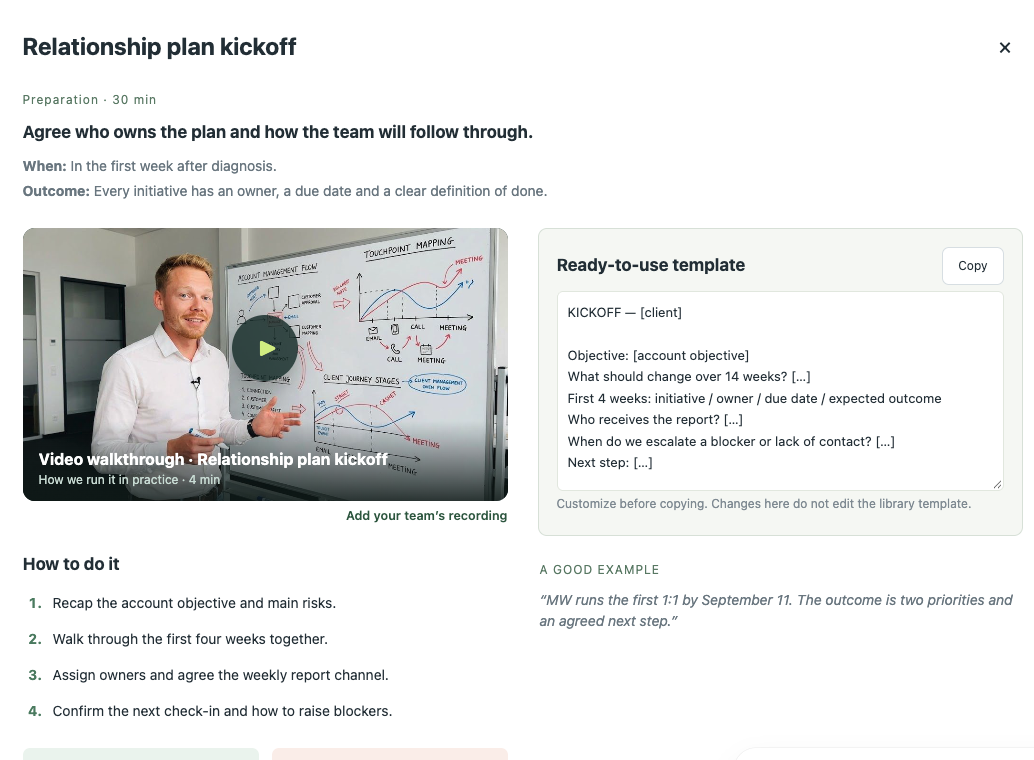
2. Week one: agree how the relationship works
Decide where the client can get an answer and how blocked work is escalated. Keep the process understandable enough that a new person can join without a founder explaining everything again.
COPY & ADAPT
Client goal: [in their words]
First milestone: [output and acceptance]
Agency owner / client owner: [names]
Decisions needed: [who, what, date]
Updates: [channel and agreed cadence]
Scope changes: [approval route]
Problems: [escalation contact]
Next check-in: [date and purpose]
3. First month: create an early feedback loop
Choose a useful first milestone with the client. Show progress, ask what is unclear, and check the working experience. The early win should be real and relevant—not a ceremonial deliverable designed to look busy.
- Ask: what has been useful so far? What has been harder than expected?
- Check whether approvals, access, and communication are slowing work.
- Record feedback with an owner and a response date.
- Close the loop: say what changed, or explain why the suggestion is not being adopted.
4. Days 30–90: verify value and reset the plan
Revisit goals as you learn more. Speak with the sponsor as well as the operational contact. Use a QBR or shorter review to compare outcomes with the original purpose and decide what comes next.
Do not wait until day 90 to raise an urgent problem. The calendar creates checkpoints; the actual client situation decides when a conversation is needed.
5. Look beyond NPS
If you use Net Promoter Score, calculate percentage of promoters (9–10) minus percentage of detractors (0–6) on the recommendation question. Report sample size, timing, and who answered. A score from two friendly contacts does not summarize an entire enterprise relationship.
Combine direct feedback with time to the first agreed useful outcome, unresolved issues, approval delays, and commitments kept. Define each measure with the client where relevant. Treat changes as investigation prompts, not proof that one process caused satisfaction or revenue growth.
Start with one account this week
- Write a kickoff summary the client can correct.
- Confirm decision and escalation owners.
- Schedule an early feedback conversation.
- Record the response to one piece of feedback and close the loop.
Common questions
How long should B2B agency onboarding take?
Use the engagement’s complexity and dependencies to set the timeline. The first 90 days are a planning frame, not a mandatory standard for every client.
Is NPS enough to measure client happiness?
No. Pair it with qualitative feedback, visible progress against goals, and unresolved issues. Show who responded and how many responses you received.